
_900.jpg)
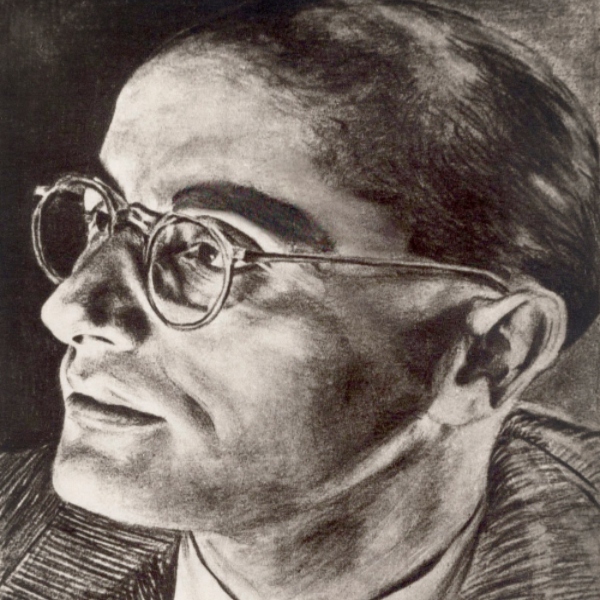
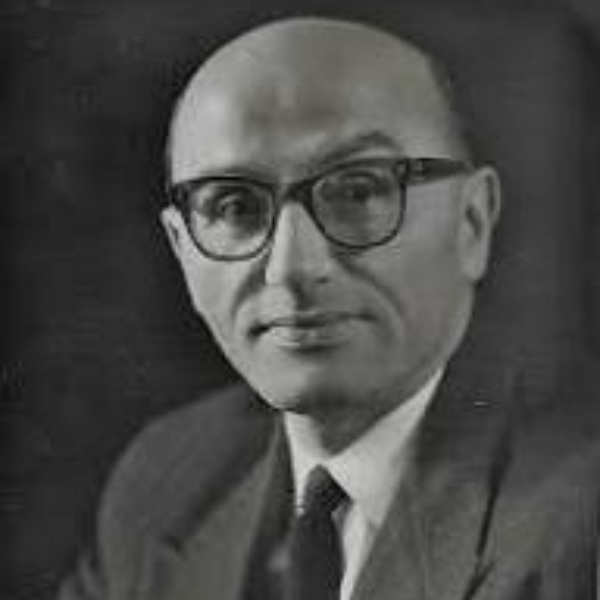
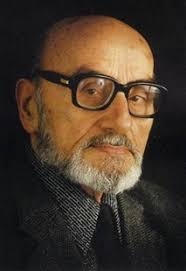
Menelaos Pallantios - Composer, Conductor
Biography Based on Family Records
Biographical Details of the Conductor and Composer Menelaos Pallantios
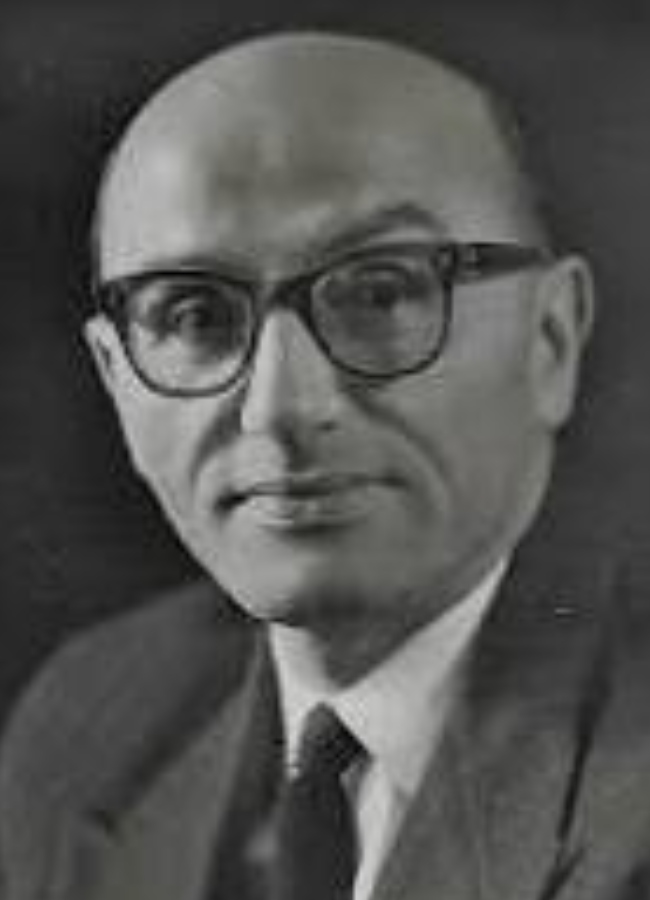
Menelaos Pallantios was born in Piraeus on January 29, 1914. He attended the Ionideios School of Piraeus. He studied piano at the Piraeus Conservatory. He pursued advanced studies in music theory at the Athens Conservatory under Philoktitis Oikonomidis and Dimitri Mitropoulos, graduating with diplomas in Harmony (1930–33), Counterpoint, and Fugue (1936). In 1938, on a scholarship from the Italian Government, he moved to Rome, where he continued his musical studies under Professor Alfredo Casella.
After completing his studies there, he returned to Piraeus, where he initially taught at the Piraeus Conservatory and subsequently served, from 1936 to 1974, first as a professor and later as Director of the Athens Conservatory.
He fought tirelessly for the relocation of the Athens Conservatory from its historic building on Pireos Street to its new premises at the intersection of Rigillis and Vasileos Georgiou Streets. It is worth noting that the building—designed by the internationally acclaimed architect C. Despotopoulos—was initially met with skepticism but later, vindicating Pallantios’s choice, gained recognition and became established not only as a Higher School of Music and Drama but also as a venue housing all performing arts.
During the period 1974–1976, he served as Chairman of the Board of Directors of the Athens Conservatory, an institution to whose service he devoted his entire life. He was elected Chairman of the Board of Directors of the Athens Conservatory (1986–2006) and was subsequently named Honorary Chairman for Life. In 1959, he assumed the directorship of the Athens Choir. From 1964 to 1967, he served as General Director of the Greek National Opera and as conductor of the National Theatre of Greece. As General Director of the Greek National Opera and Chairman of its Board, he continued the enrichment of the repertoire initiated by Kostas Bastias, introducing works by Tchaikovsky, Wagner, Prokofiev, Bartók, Lortzing, Boito, Giordano, and Ibert. He also invited leading international stage directors and soloists to perform at the Odeon of Herodes Atticus.
In 1969, he was elected a full member of the Academy of Athens, and the following year he became President of the Class of Letters and Fine Arts. In 1977, he assumed the role of Secretary for the Minutes of the Academy’s Plenary Sessions, and in 1983 he was elected President of the Academy of Athens. Through the Academy’s platform, he presented not only the works of major composers of the Classical tradition but also topics concerning humanistic education and culture. In 1973, on his own initiative, the Hellenic Educational Society was founded, bringing together members of the Academy and university professors. As President of the Society, he delivered a large number of lectures in nearly all major cities as well as many smaller provincial towns throughout Greece.
His compositional work began at a very early age and received highly favorable reviews from both the Athenian and Piraeus press. He composed vocal and orchestral works (Prayer to the Acropolis, Concerto for Piano and Orchestra, Suite in Old Style, among others), as well as chamber music. He wrote dance music inspired by Ancient Greece (1942–1969), as well as music for six productions of ancient Greek drama performed in ancient theatres in Greece and abroad (1949–1964). He composed ballet music, incidental music for eight ancient tragedies, the complete musical score for the tragedy-oratorio Antigone, and music for both Greek and American motion pictures.
Menelaos Pallantios also served as General Secretary of the Association of Greek Composers and participated as a member of major international music committees in Romania and Italy, as well as serving as Chairman of the Music Committee of the Cyprus Conservatory.
He also participated in international and Greek music competitions. He was honored with numerous Greek and foreign medals , including the Gold Cross of George I, the Higher Commander of the Order of the Phoenix of the Hellenic Republic, the Medal of the City of Paris, and the Decoration of Commander of the Order of Merit of the Italian Republic. In 1983, he was elected a full member of the Tiberina Academy of Rome. In 1996, he was awarded an Honorary Doctorate by the Department of Music Studies of the University of Athens. He was also granted the title of Grand Referendary of the Great Church of Christ (the Ecumenical Patriarchate).
His lectures were broadcast by radio stations throughout Greece. He was also engaged in translation work, focusing primarily on the poetry of Baudelaire. During the 1980s, he published books on musical subjects, as well as a series of reflective writings presented in the form of aphorisms.
He was married twice: first to Miranda Lagakou and later to Eleni Potamianou. Menelaos Pallantios had a masterful command of the Greek language and spoke French and Italian fluently. He resided in Athens and, during the final years of his life, in Palaio Faliro.
He passed away at an advanced age on August 9, 2012.
A) WORKS FOR ORCHESTRA
LIGHT TO LIFE, symphonic poem
LAMENTS AND DANCE
SUITE IN OLD STYLE
PRELUDIO
LITTLE SUITE
PRAYER TO THE ACROPOLIS, symphonic poem
NARCISSUS, symphonic myth
GREEK CLASSICAL OVERTURE
6 PIECES FOR ORCHESTRA
SYMPHONY in B-flat Major
DIVERTIMENTO No. 1
TRAGIC POEM
CHACONNE
B) ORCHESTRATIONS
Prelude VIII by J. S. Bach
Chaconne by Tomaso Antonio Vitali
Concerto in E Minor by Pietro Nardini
C) FOR PIANO
PIANO GAMES
FOUR PRELUDES
CRETAN DANCE
SONATINA
CONCERTO (Radio Award)
D) FOR VIOLIN
SUITE IN OLD STYLE
HABANERA
E) FOR VOICE AND PIANO
Approximately 40 songs on poems by Greek poets
F) CHAMBER MUSIC
SONATA for Piano and Violin in G Major
TRIO for Oboe, Clarinet and Bassoon
G) FOR BALLET
THREE ARCHAIC SUITES
PROCESSION TO ACHERON
PRAYER IN AN ANCIENT TEMPLE
ELECTRA
PENTHESILEA
GREEK TRIPTYCH
DREAM
H) ORATORIO
THUS SPOKE THE PROPHETS, for narrator, contralto, tenor, mixed choir and orchestra, on a poetic text drawn from the Old Testament
I) MUSICAL TRAGEDY
ANTIGONE, one-act musical tragedy, on a poetic text based on Sophocles' tragedy
J) INCIDENTAL MUSIC FOR ANCIENT GREEK TRAGEDIES OF THE NATIONAL THEATRE
AGAMEMNON by Aeschylus
LIBATION BEARERS (CHOEPHORI) by Aeschylus
EUMENIDES by Aeschylus
ELECTRA by Sophocles
OEDIPUS AT COLONUS by Sophocles
HECUBA by Euripides
ION by Euripides
ALCESTIS by Euripides
K) STAGE MUSIC
IN THE HEAT OF SUMMER by Th. Synadinos (National Theatre)
SIBYLLA by Angelos Sikelianos (State Theatre of Northern Greece)
L) FILM MUSIC
For 6 Greek and 4 American films
M) HARMONIZATIONS AND ORCHESTRATIONS OF FOLK SONGS
N) THEORETICAL WRITINGS
HARMONY (unpublished)
Works of the Composer Menelaos Pallantios (1914–2012)
Songs for voice and piano – approximately 30 in number.
"Tragic Poem", from Solomos' The Mad Mother, for string orchestra.
Songs with orchestra.
Sonata for Piano and Violin.
Unknown work.
Suite in Old Style, transcription for piano and for strings.
Pastoral (manuscript).
Sonatina (1942–1943).
Symphony in B-flat Major (1948), for orchestra – 46 orchestral parts.
Concerto for Piano and Orchestra in E (manuscript).
Suite in Old Style, for strings.
"SAPPHICON"
Miscellaneous Works (Sapphicon, Hear, O Lord, the Just Cause, Cretan Dance, Les Cloches).
Antigone's Lament.
Sonata for Violin (manuscript score)
"In the Heat of Summer" (manuscript score).
Cretan Dance (manuscript score).
Duet for Violin and Cello.
"Prayer to the Acropolis", transcription for piano four hands.
Games for Piano.